
Case Study: Multi-location commercial services and regional logistics
Creating a technology roadmap before the next investment
Client identity is kept confidential at their request.

Evidence disclosure: This engagement produced no approved numerical results, client quotation or project screenshots at time of publishing. The outcome below is described in terms of the decisions made, not invented savings or performance percentages.
The challenge
The situation
A multi-location commercial-services and logistics enterprise in Dubai was preparing for growth into Saudi Arabia while its technology environment had evolved independently across sites: overlapping applications, locally made infrastructure decisions, and no roadmap connecting spend to business priorities.
Two external vendor proposals made the decision harder rather than easier. One favoured a broad proprietary system overhaul; the other required substantial local infrastructure investment. Different scopes and commercial models meant the headline prices could not be compared responsibly.
Before committing budget or accepting the operational risk of a major migration, leadership engaged Taleef Technologies as an independent adviser, outside of either vendor's proposal.
Our approach
Our approach
Business-first discovery: interviewed executive leadership, operational managers, finance and the internal IT coordinator to understand how the organisation actually operated before assessing how its technology should change.
Current-state audit: documented endpoint and network condition, applications and subscriptions, identity and access practices, backup and continuity evidence, and vendor and contract terms across five evidence domains, distinguishing observed evidence from stakeholder-reported claims.
Requirements translation: converted business priorities into testable technology requirements covering multi-site access, expansion readiness, data resilience, vendor independence and cost predictability, then used those requirements as the evaluation baseline.
Vendor normalisation: separated each proposal into consistent categories (implementation, hardware, recurring licences, support, optional components, contract terms, data portability) so proposals could be compared against the same requirements rather than a headline total.
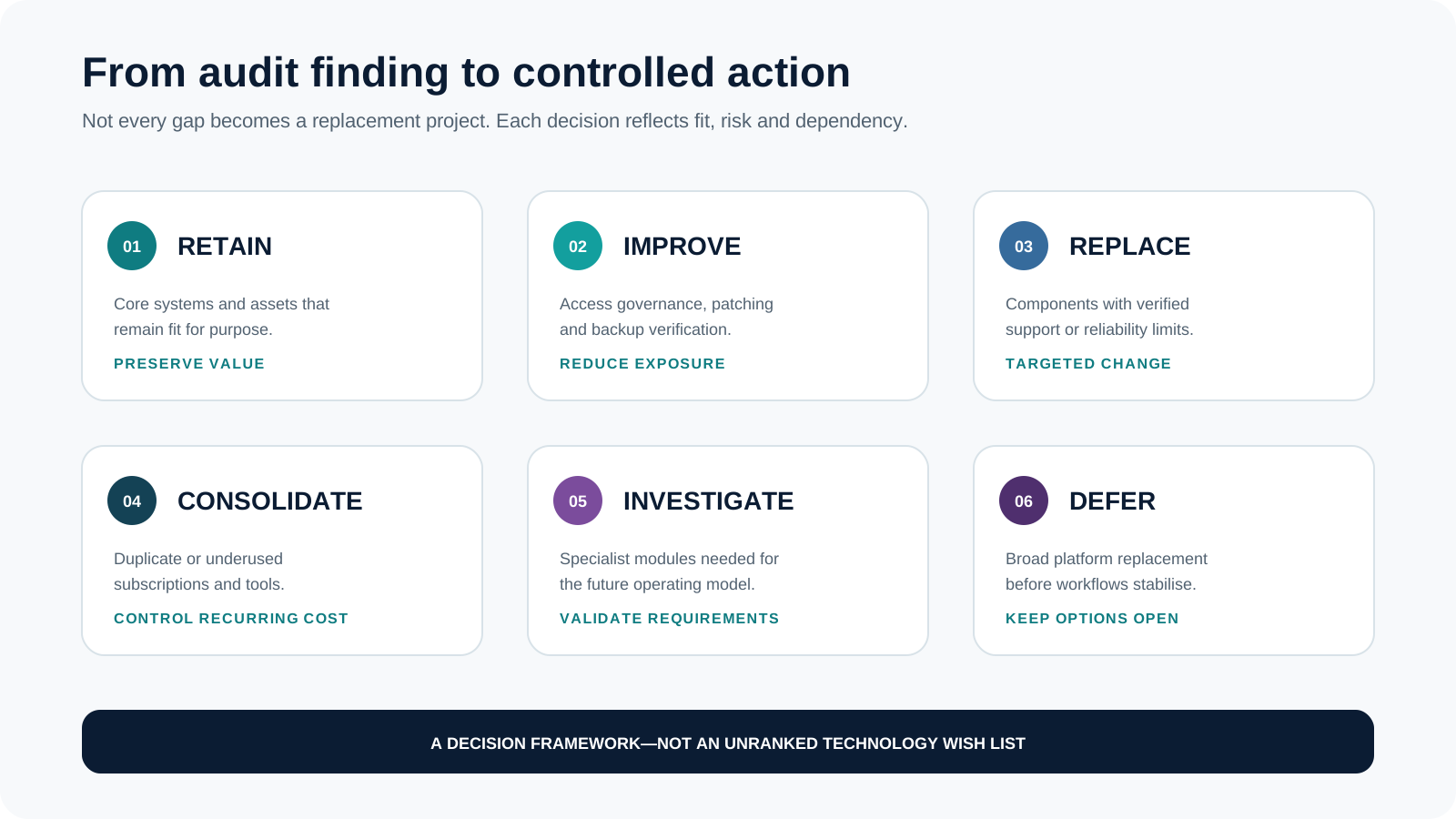
Action classification: assigned every finding to retain, improve, replace, consolidate, investigate or defer, rather than treating every imperfection as a replacement project.
Outcome
The outcome
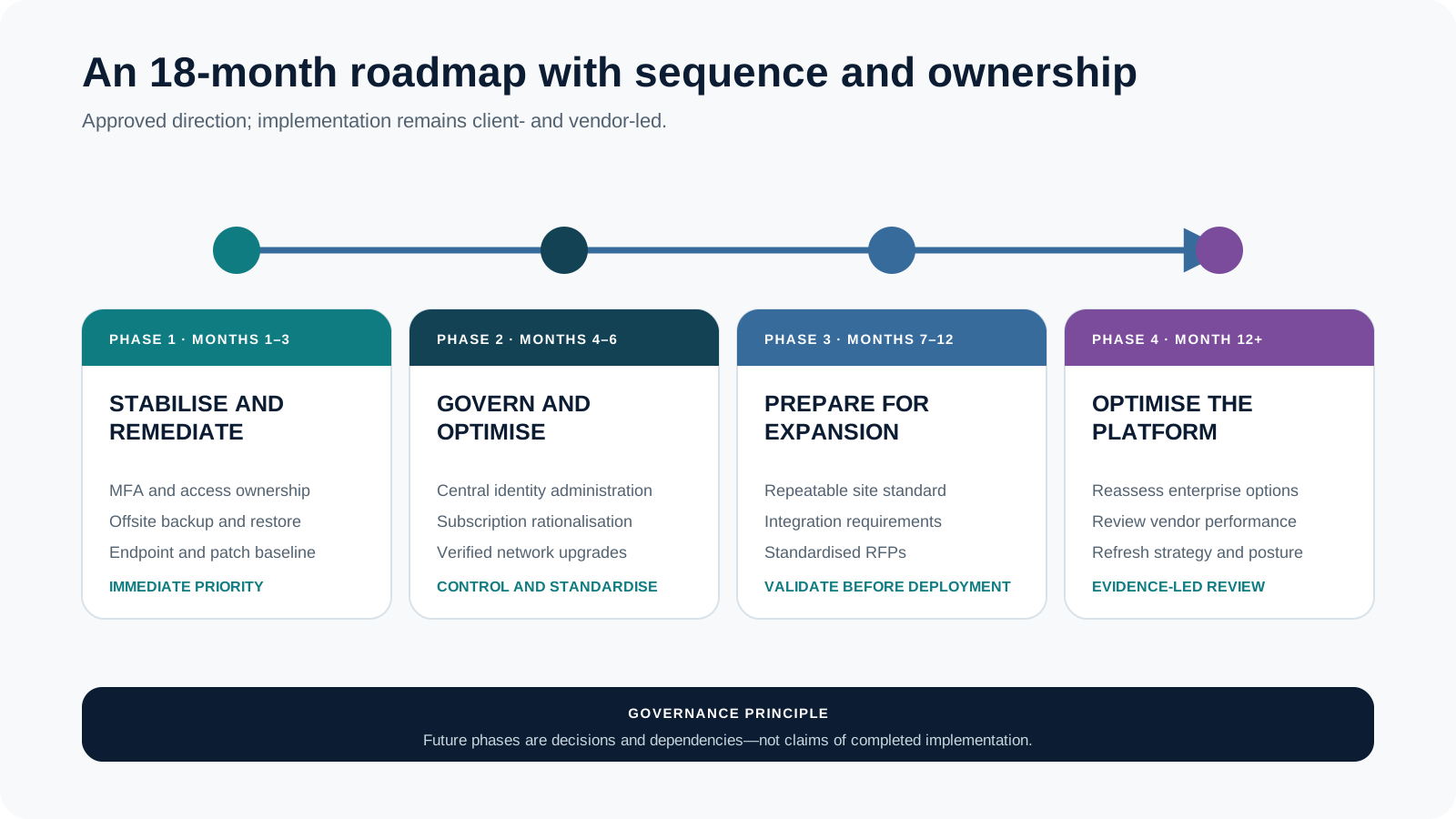
Taleef recommended against the proposed full-system overhaul. Instead, leadership approved a phased 18-month hybrid roadmap: retain systems that remained fit for purpose, address access and backup risk first, consolidate unnecessary overlap, and defer major application replacement until requirements across current and planned sites were standardised.
Leadership approved the roadmap and authorised Phase 1 remediation, which the client's internal IT team began with selected specialist vendors. Taleef's role remained advisory throughout, with quarterly reviews established to track roadmap progress and vendor delivery against the approved decision framework.
- Business requirements before products
- Vendor options were assessed against operating needs, risk and expansion plans, not feature volume in a demonstration.
- Independent of vendor economics
- Taleef's recommendation was not influenced by reseller economics, implementation commission or referral fees from evaluated vendors.
- Evidence sources kept separate
- Findings observed directly, client-supplied documentation and stakeholder-reported issues were tracked and reported as distinct categories, not blended into a single claim.
- Useful assets preserved
- The roadmap did not require replacement where governance or targeted improvement addressed the underlying risk.
This was an advisory engagement. Unless covered by a separate agreement, Taleef did not purchase hardware or software, implement applications or migrate databases, perform penetration testing or issue a compliance certification, or replace the client's internal IT team. Implementation responsibility remained with the client and its selected specialist providers.
FAQs
Frequently asked questions
Did Taleef recommend a particular vendor?
No vendor is endorsed in this case study. Taleef evaluated pathways against the client's approved requirements and recommended a phased hybrid direction that limited unnecessary replacement and vendor dependency.
Was this a formal cybersecurity audit?
No. It was a management-level cybersecurity and continuity posture review, not a penetration test, compliance certification or legal opinion.
Did Taleef implement the roadmap?
No. Taleef's scope was advisory. The client's internal team and selected third-party specialists were responsible for implementation.
Can Taleef evaluate proposals a company has already received?
Yes. Taleef can normalise technical and commercial scopes, identify exclusions and dependencies, and assess proposals against the organisation's approved requirements.
Make the technology decision before committing the budget
A practical conversation about the infrastructure decision, vendor proposal or technology investment your organisation needs to evaluate.