
Case Study: Home and lifestyle retail
Launching a custom e-commerce channel around how the business actually sells
The challenge
The situation
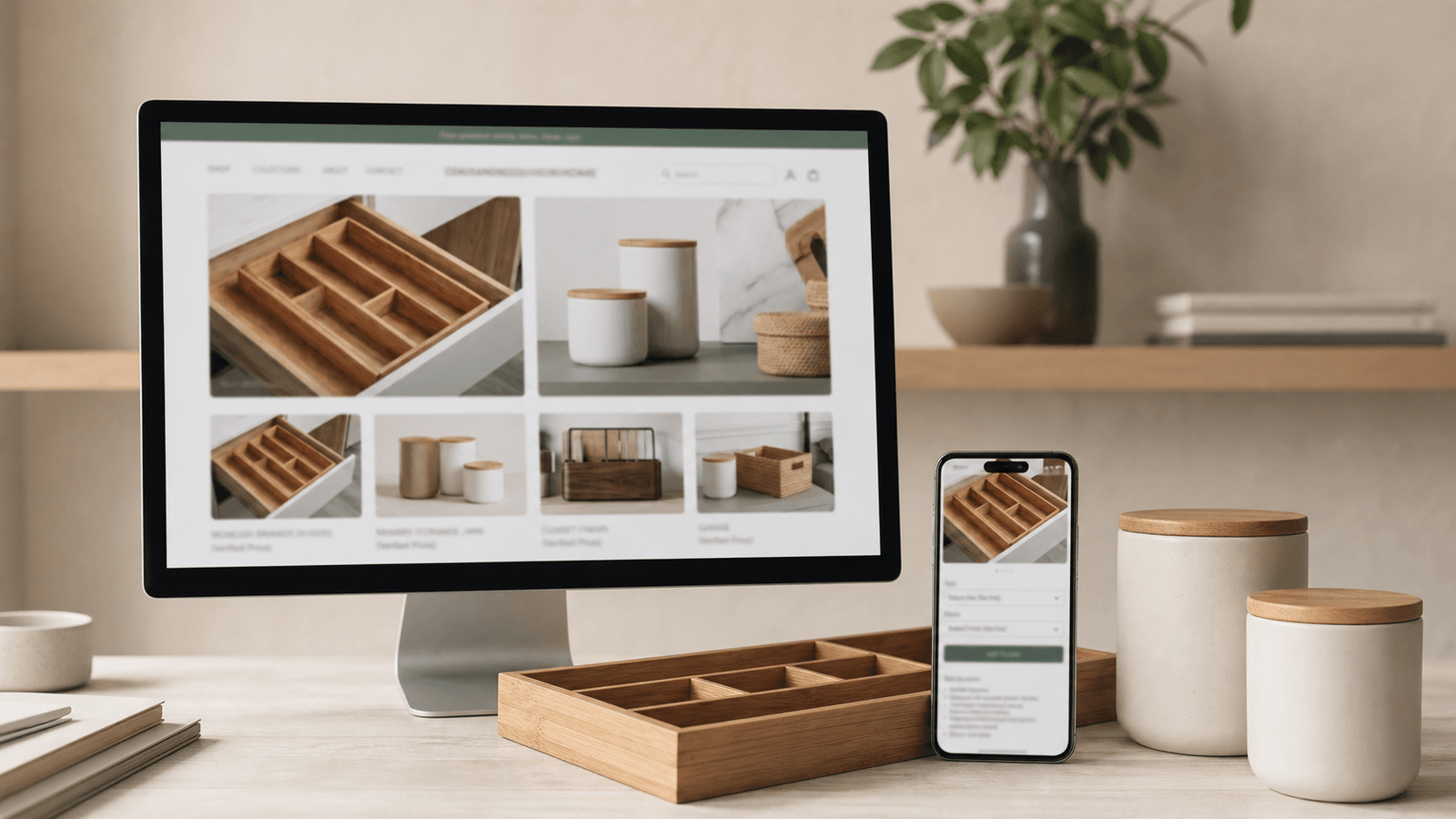
A home-organisation retailer had products customers already valued, but no owned online journey through which those products could be consistently discovered, evaluated and purchased. Product information and purchase enquiries ran through manual, assisted channels instead of a dedicated storefront.
Launching online meant more than a storefront: the business needed a clear model for presenting products, handling configurable options, capturing an order, and moving that order straight into fulfilment.
Our approach
The approach
Commerce discovery: mapped the relationship between products, customer decisions and internal operations before any interface work began, including how customers evaluate a product, what checkout needs to collect, and what the client team does after an order is submitted.
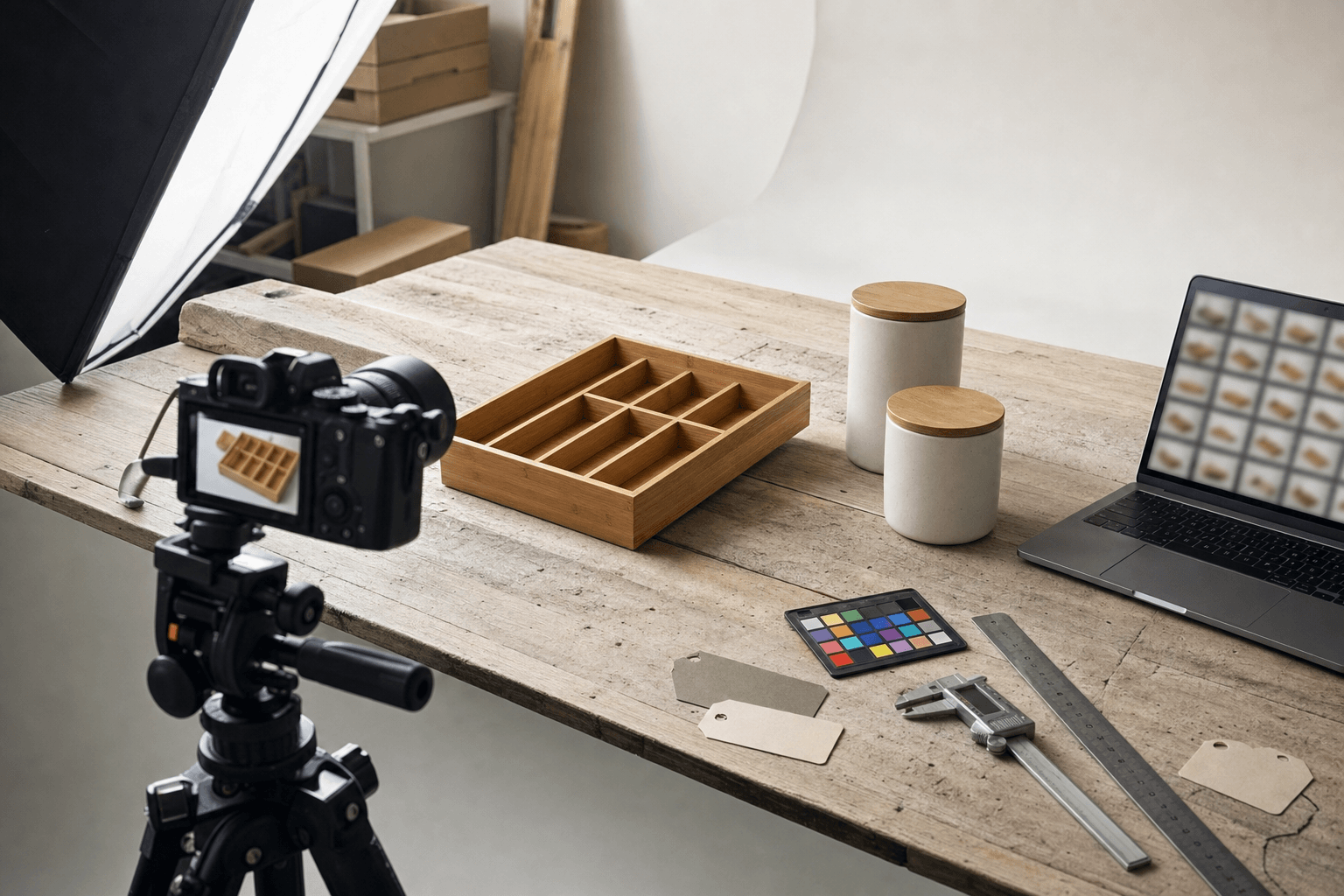
Catalogue structure: defined an agreed structure for product description, specifications, configurable options, imagery, price, availability and search metadata, including consistent variation rules for configurable wooden storage and ceramic storage products.
Purchasing journey design: built category and product discovery, variation selection, cart and checkout around real customer questions, keeping product identity and option names consistent from discovery through order confirmation.
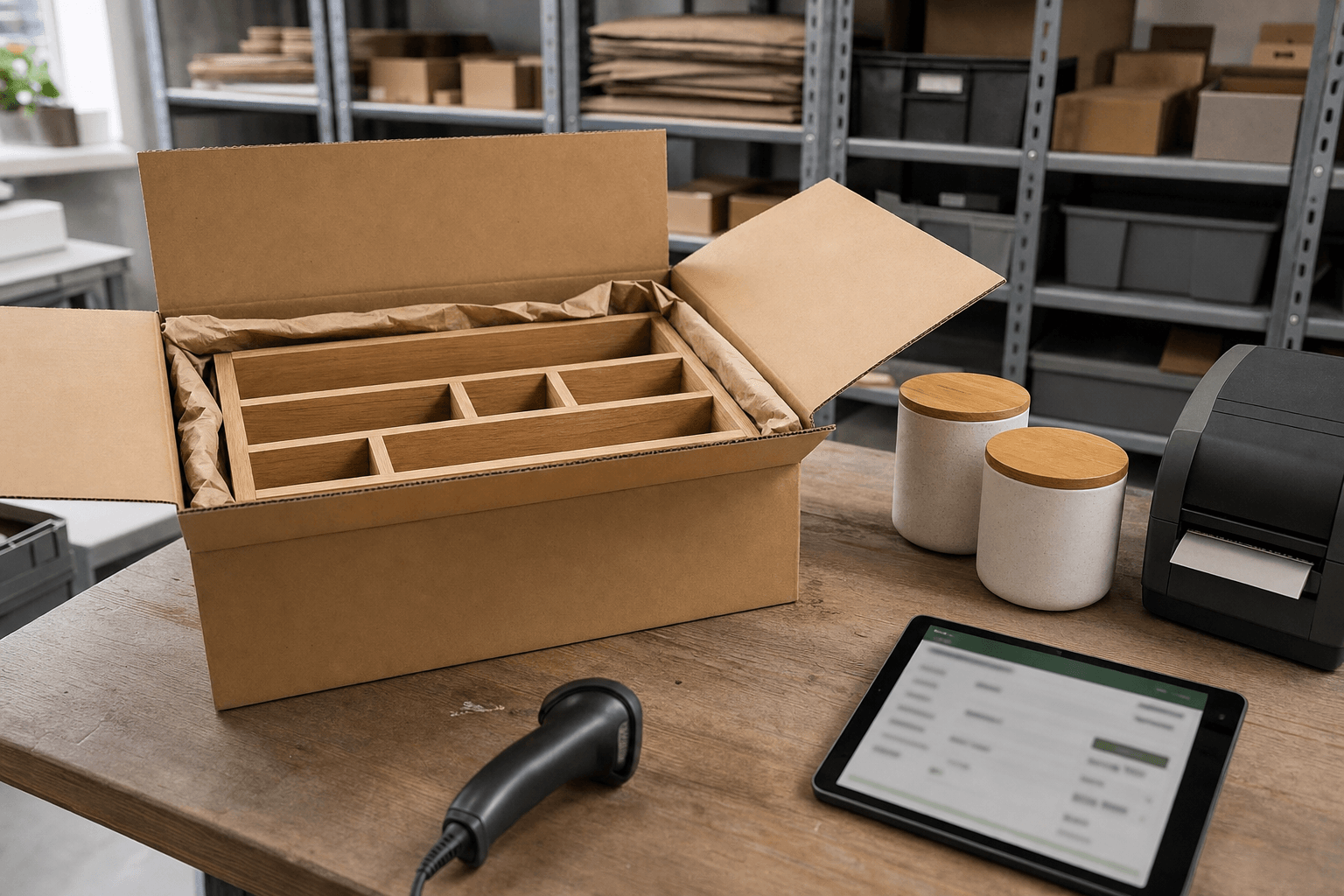
Order handling: connected the customer-facing checkout to a defined internal workflow for order review, availability confirmation, fulfilment and customer updates, with roles assigned to authorised client users.
Search and analytics foundation: crawlable navigation, descriptive category and product content, stable URLs, structured data and analytics events across product discovery, cart and checkout, without promising specific rankings or citations.
Outcome
The outcome
Taleef delivered the retailer's first structured, owned e-commerce presence: a dedicated mobile and desktop purchasing journey connected to a defined order-handling process, with product and order management placed in the client's own hands.
The business moved from an assisted, manual sales process to a live, self-service storefront capable of taking orders around the clock, backed by a fulfilment workflow built around how the team actually operates.
FAQs
Frequently asked questions
Why did the retailer need a custom commerce system?
The business needed the digital purchasing journey to reflect its actual product information, configurable options and internal operating process, rather than a generic storefront template.
Was the experience designed for mobile?
Yes. Mobile product discovery and purchasing were treated as core journey requirements alongside desktop, not a compressed secondary view.
What changed for the business after launch?
The retailer went from an assisted, manual sales process to a live storefront that takes orders directly, with product and order management handled by the client's own team.
Ready to launch a store built around how you actually sell?
A practical discussion about your catalogue, customer journey, payments and fulfilment requirements.